 en
 Български


SubTotal: 00.00 BGN
This site uses cookies to help give you the best possible user experience. By continuing to browse this site you give consent for cookies to be used!
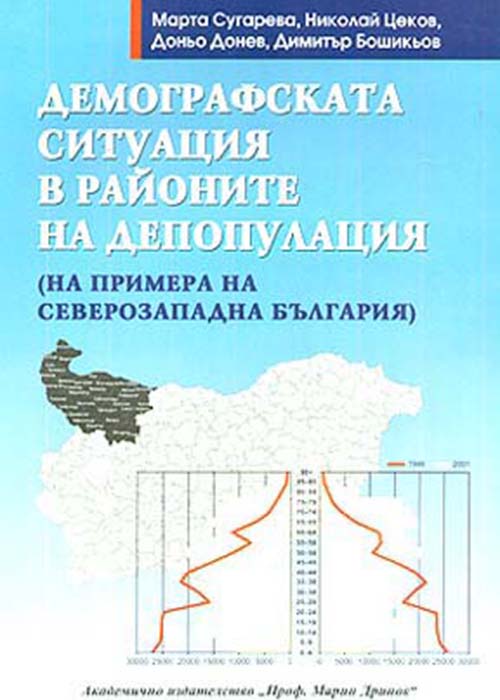
The demographic situation in depopulation areas
Marta Sugareva, Donio Donev, Nikolai Cekov, Dimitar Boshikiov
0 item(s) in stock
Out of Stock
Year of Publication: 2008
Cover Type: Soft
Category: Demography
Edition: First Edition
Pages: 144
Format: 7x10x1.6
Language: Bulgarian
Summary
The book is devoted to one of the most pressing issues in Bulgaria's demographic development – the depopulation of the country and of certain regions. The aim is to show the essence of depopulation as a demographic and social phenomenon characteristic of the period following the onset of democratic change, especially in villages in certain regions. In the book, depopulation is illustrated using the example of the region of Northwestern Bulgaria, but the main patterns observed in this region are also evident, albeit to a lesser extent, in all other regions of the country, as well as in other Eastern European countries. There are two main reasons for depopulation: emigration (from the region and from the country) and negative natural growth. When the population in individual (types of) settlements, such as individual villages, is studied, it is found that depopulation began long before 1989 in connection with the industrialization of the country and the mass migration of the population from villages to cities. The book attempts to analyze the process of depopulation from a demographic, geographic, sociological, and economic perspective. It highlights the most important causes and consequences of this process and provides recommendations for social policy at the regional and national levels. The recommendations are based both on the results of the analysis and on the requirements for our country as a member of the European Union.
About The Authors
Specifications
ISBN: 978-954-322-157-8
DOI: n/a
Year of Publication: 2008
Category: Demography
Edition: First Edition
Language: Bulgarian
Cover Type: Soft
Pages: 144
Weight (kg): 0.220 kg
Format: 7x10x1.6
Width (mm): 70
Height (mm): 100
Тhickness (mm): 16
Recently Viewed Books

