en
 Български


SubTotal: 00.00 BGN
This site uses cookies to help give you the best possible user experience. By continuing to browse this site you give consent for cookies to be used!
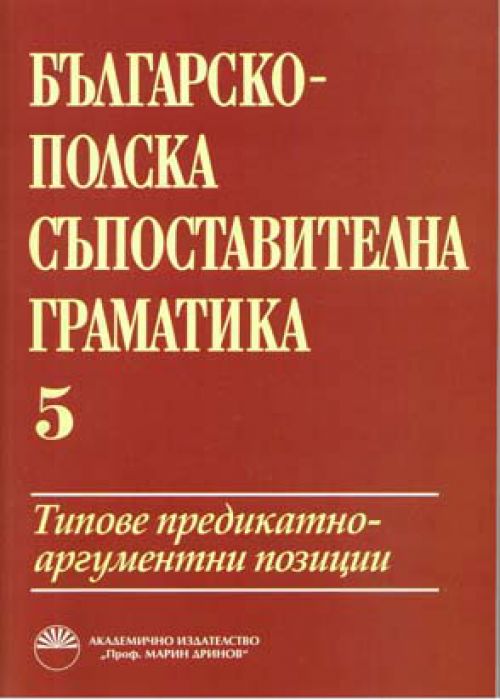
Bulgarian-Polish comparative grammar
Volume 5. Types of predicate-argument positions
Malgojata Koritkovska
10 item(s) in stock
Year of Publication: 2011
Cover Type: Soft
Category: Reference Books
Edition: First Edition
Pages: 274
Format: n/a
Language: Bulgarian
Summary
The Bulgarian-Polish comparative grammar is the first and so far the only comprehensive attempt in the world at semantic comparison with a gradually developed intermediary language. The languages being compared could not be treated as equivalent without an attempt to create a semantic intermediary language. The intermediary language in the comparative study of the semantic category of definiteness/indefiniteness in Polish and Bulgarian is based on the assumption of the quantitative nature of this category. At the level of the semantic characteristics of the predicates that determine the form of the sentence structure, the analysis aims to clarify the nature of the relations through the number and nature of the argument positions opened. This approach, applied in the Bulgarian translation of volume 5 of the BPSG presented to readers, allows for a comparative study of the syntactic level of the two languages, which, according to accepted principles, is based on a semantic foundation.
Аbout The Author
Specifications
ISBN: 978-954-322-436-4
DOI: n/a
Year of Publication: 2011
Category: Reference Books
Edition: First Edition
Language: Bulgarian
Cover Type: Soft
Pages: 274
Weight (kg): 0.470 kg
Format: n/a
Width (mm): /n/a
Height (mm): /n/a
Тhickness (mm): /n/a
Recently Viewed Books