en
 Български


SubTotal: 00.00 BGN
This site uses cookies to help give you the best possible user experience. By continuing to browse this site you give consent for cookies to be used!
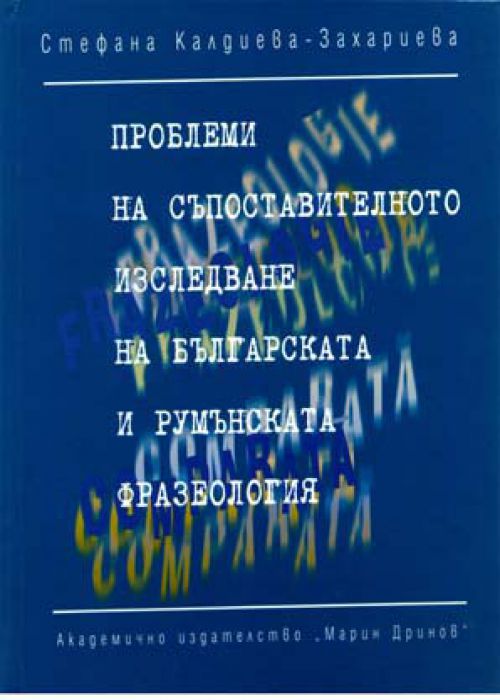
Problems in the comparative study of Bulgarian and Romanian phraseology
Stefana Kaldieva-Zaharieva
10 item(s) in stock
Year of Publication: 2005
Cover Type: Hard
Category: Cultural-Historical Heritage and National Identity
Edition: First Edition
Pages: 416
Format: n/a
Language: Bulgarian
Summary
This work is the first to comprehensively examine the phraseological systems of the Bulgarian and Romanian languages, based on the most complete factual documentation possible. Phraseology is usually defined as the most specific and therefore most difficult to translate part of the expressive richness of any language. Comparative typological research contributes to the discovery of its actual specificities in a given language, as well as cases of similarity, closeness, resemblance, and difference. The book is the first part of a multifaceted study of the phraseology of two languages belonging to different language families but developed within the Balkan language community. It analyzes the phraseological material in terms of the components and structural organization of phraseological units, while also highlighting a number of grammatical issues that are directly reflected in them. It shows the characteristics of form in their close connection with the types of semantics in phraseology. The book is intended for philologists, translators, Bulgarian students majoring in Romanian philology and Balkan studies, Romanian students studying Bulgarian philology, as well as anyone interested in the problems of phraseology.
Аbout The Author
Specifications
ISBN: 954-322-046-8
DOI: n/a
Year of Publication: 2005
Category: Cultural-Historical Heritage and National Identity
Edition: First Edition
Language: Bulgarian
Cover Type: Hard
Pages: 416
Weight (kg): 0.400 kg
Format: n/a
Width (mm): /n/a
Height (mm): /n/a
Тhickness (mm): /n/a
Recently Viewed Books