en
 Български


SubTotal: 00.00 BGN
This site uses cookies to help give you the best possible user experience. By continuing to browse this site you give consent for cookies to be used!
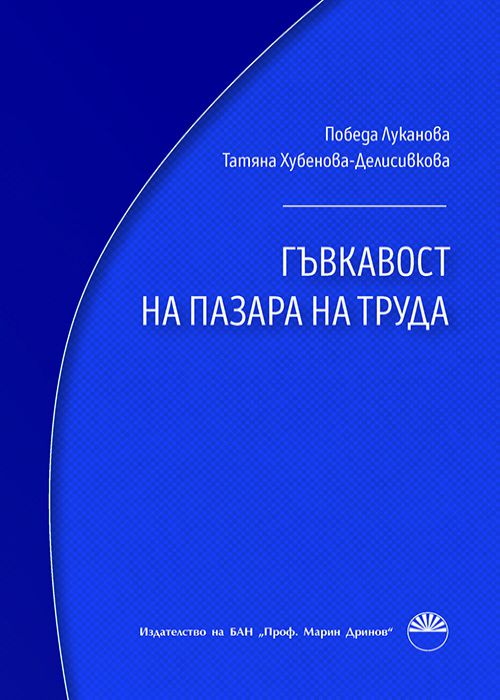
LABOUR MARKET FLEXIBILITY
Pobeda Lukanova, Tatyana Hubenova
0 item(s) in stock
Out of Stock
Year of Publication: 2024
Cover Type: Soft
Category: Man and Society
Edition: First Edition
Pages: 160
Format: n/a
Language: Bulgarian
Summary
The analysis on the external flexibility of the labour market proves its moderate performance. The existence of low internal mobility is proved on the basis of deficits in the status mobility of the labor force, both in the good years of economic growth and during the problematic periods. Probabilities of employment mobility are low and very low, when using atypical forms of employment. Two sets of institutional prerequisites for labour market flexibility are presented: wages and wage negotiations and active labour market policies. The need for strategic changes in bargaining towards increasing the cost of labour in Bulgaria was advocated in favour employment flexibility. Active policies need a substantial renewal and restructuring of priorities in order to improve the quality of workforce and its flexibility according to the strategic priorities of the Green Deal and the digital transition.
The importance of public spending in supporting labour market flexibility in the three Baltic EU Member States (Latvia, Lithuania and Estonia) after its inclusion in the Eurozone is justified in detail. Wages in these countries have been used as the main correcting variable for “internal devaluation” and for restoring the competitiveness of the national and of the European economy. For Bulgaria, a challenge remains to modernize the policy of public and private spending on flexibility and security in the labour market due to the presence of risks of asymmetric shocks and crises.
About The Authors
- • Pobeda Lukanova
- Pobeda Lukanova, PhD, defended her dissertation at the Institute of Economics of the Bulgarian Academy of Sciences. Since 2008 she has been teaching at the University of Veliko Tarnovo “St. Cyril and Methodius". In 2011 she was elected head of the Department of Organization and Methodology of Social Activities at the Faculty of Economics (VTU). In 1996-1997 she worked as Deputy Head of the Employment Agency. Participates in projects of international organizations, such as the European Commission, the United Nations Development Program and the World Bank, as well as the Ministry of Labor and Social Policy.
- • Tatyana Hubenova
Specifications
ISBN: 978-619-245-408-1
DOI: n/a
Year of Publication: 2024
Category: Man and Society
Edition: First Edition
Language: Bulgarian
Cover Type: Soft
Pages: 160
Weight (kg): 0.290 kg
Format: n/a
Width (mm): /n/a
Height (mm): /n/a
Тhickness (mm): /n/a
Recently Viewed Books